
Stewardship
-
-
Stewardship PrayerO Lord, giver of life and source of freedom, I know that all I have received is from your hand. Gracious and loving God, You call us to be stewards of Your abundance, the caretakers of all you have entrusted to us. Help us to always use Your gifts wisely and teach us to share them generously. Amen.
-
-
-
In the fall of the year, our Gospel lesson focused on the parable Jesus tells of the workers sent into the vineyard to work. You know the story: At the end of the day the master of the vineyard pays all the workers equally regardless of when they began their tasks.
Jesus offers a valuable lesson about the difficulties we might discover relating to God's grace. What is most interesting to me is that our human foibles have not changed since Jesus first told the story. We are still subject the temptations of envy and avarice that afflict us as human beings.
For that reason, this lesson provides us a living definition for stewardship - STEWARDSHIP is the convergence of the Gospel with the economy o9f the world. Stewardship is also the realization that God's economy based on grace is never the same as the economy of the world in which we function daily. So, the meaning of this story comes in the last sentence of the text: "So, the last will be first and the first will be last."
That sentence provides us everything we need to know about how we function as Christian people in the world. Yet, in a very real way, caring for those who are last is not related to what we call "common sense." Common sense reminds us of all kinds of behaviors contrary to the Gospel.
Through the use of parables and stories, Jesus leads us to define our lives in different ways. Stewardship reminds us of a different way to lead our lives. We learn about that way throughout our lives as we focus on God's ultimate love, ultimate grace, and ultimate joy!
-
-
-
 We all know what forgiveness is. It is something we ask for every time we say the Our Father. Within that prayer given us by Christ is the sentence, "Forgive us our trespasses as we forgive those who trespass against us." This prayer is an invitation to a different kind of living than most of us experience. We petition to God for mercy, but we also pledge to forgive those who may have offended us. However, we all most likely struggle with some of this. The main focus of today's readings on this is absolutely forgiveness.
Have you ever said (or even heard someone say something similar) "I will never forgive that person," or "I will forgive him (or her or them), but I will never forget?" Forgiveness is perhaps one of the most disturbing and emotional experiences we will ever encounter in our lives. It may involve feelings of anger, revenge, resentment, hurt, hostility, sadness, bitterness, and retaliation. Nevertheless, it also involves reconciliation, compromise, contrition, repentance, and redemption. It is not just intellectual; it is also spiritual.
In the Gospel, Peter poses a question to Jesus after hearing Him speak of forgiveness. Peter says, "Lord, if my brother sins against me, how often must I forgive? As many as seven times?" You can almost see Jesus' smile, maybe even laugh, when He replies, "I say to you, not seven times, but seventy-seven times." Some fundamentalists may take this literally, but Jesus is probably only taking Peter's question and expanding it to make it clear that there is not limit to forgiveness. He might have also said, seven hundred seventy times, and the point would be the same. Jesus is not putting an end point to forgiveness and to reinforce His point He relates a parable that relates to an unforgiving, yet forgiven servant.
We are told by the Lord that we must forgive "from your heart." You might say there are two kinds of forgiveness, heart forgiveness and spoken forgiveness. In some ways it is similar to love in that forgiving from one's heart is unconditional. Going through the motions and making a statement of forgiveness is actually conditional. We must understand that.
Jesus wants us to appreciate that forgiveness is limitless. We are called to forgive someone over and over without seeking retribution. That is a challenge that may seem impossible to many of us, but that is quite frankly what we need to try to achieve. Obviously, in order to really accomplish what we need to pray for and rely on the Lord for the strength, perseverance, and the patience that is required.
-
-
-
 This week's Gospel, Jesus discusses how to deal with disputes in the Church. He shares guidance for his followers to deal with conflicts fairly. First, the matter should be dealt with privately between the two people. If the matter cannot be resolved between the two members of the community, then it is necessary to bring in witnesses. Only if these more private ways of resolving conflict fail, the larger community be brought into the conflict and if necessary, there is a provision for exclusion from the community. This Gospel provides a process that works to mend relationships rather than perpetuate hatred. This aligns with the idea of forgiveness as a way to overcome hatred. This way of addressing wrongs within the community reflects the broader concept of social justice. It emphasizes the importance of resolving conflicts to maintain harmony and promote justice among individuals in the community. This Gospel leads us to reflect on the spiritual works of mercy, particularly "admonishing the sinner" and "instructing the ignorant." It gives us a practical application of spiritual works of stewardship in daily life and the responsibility of guiding others toward righteousness. In this resolution process we are called to look beyond our own selves and to move toward Jesus' greater calling to assist others. Jesus asks us to develop a culture of accountability where others' hearts are not judged, but their actions. Matthew finishes this Gospel with Jesus reminding us of the importance of keeping our community focused on Him. We are reminded whenever two or more are gathered together there is He in their midst.
-
-
-
In today's gospel reading, Jesus talks about his death in the hands of the elders and teachers of the law and his rising after three days. As the apostle's heard this, Peter rebuked him and lost sight of the true meaning of Jesus's ministry and discipleship. Jesus then tells his apostles, "Whoever wants to be my disciple must deny themselves and take up their cross and follow me."
As we reflect on the gospel, we can draw a parallel in Peter's reaction upon hearing Jesus's death with our own Christian life. Just like Peter reprimanding Jesus on his impending suffering and death rather than accepting God's will, we too are guilty of losing sight in our own spiritual life by centering ourselves with human needs and wants.
Our physical life is wrapped around the pursuit of comfort, wealth, pleasure, and acceptance, distracting us from pursuing a long-lasting relationship with God through prayer, kindness, humility, taking ownership of our mistakes and doing something to correct it.
Taking up our cross is a call to do away with all that the body and mind seeks or desires and embrace the struggles and sufferings that accompany our daily life with Christ. We must be willing to give up our own will and desires to the will of God. Putting Jesus Christ in the center of our lives and avoiding self-indulgence is the path to becoming a disciple of Christ.
-
-
-
 In the ancient world, and in many older translations of the Bible, it was common to hear the term "messiah," or "Christ," being used to simply mean "anointed one." In fact, the words share a common definition in their respective ancient Greek and Hebrew: the word Christ comes from the Greek Christós/Khristós (Χριστός) and the Hebrew noun mašíaḥ is from the verb mashah or mashach (משח) which means "to anoint." Even the words "Christ" and "Chrism" (the holy oils used in sacramental anointing) have the same Greek root as well. While these words are still around today, in the past "messiah" and "Christ" linguistically functioned as a way to signify importance and were usually reserved for kings, priests, and prophets who had been ceremoniously anointed. In the time of Jesus, stories of "messiahs" or references to them were common. Whether it was a revered king, wandering prophet, high priest, or otherwise, there were dozens of well-respected, so called "messiahs" back then. However, while these words did garner respect in those days, their verbal significance is surely greater in a modern Catholic context. For example, certain older translations of the Bible referred to major figures like Cyrus the Great and King David in the Old Testament as a "messiah," but recently Catholics have come to use this term differently than its original form, and now reserve it only for Jesus, himself. The Gospel story from Matthew 16:13-20 is likely one reason for this. While the original definition of "messiah" as "anointed" has been largely forgotten int he context of modern religious conversations, the Apostles in the Gospel story we heard today would have been much more familiar with its archaic connotation. In the story, when the Apostles finished speculating over the possible identity of the "Son of Man," guessing the names of many known and respected "messiahs" of old, Jesus made the line of questioning more direct. The discussion shifted from "Who do people say the Son of Man is?" to "Who do YOU say that I am?" This is when Simon made the connection that this messiah, Jesus, was anointed by God, Himself.
This moment is religiously, culturally, and linguistically significant for a few reasons. Primarily, we are emboldened to proclaim, like Simon Peter, that Jesus is the Son of God. In that moment Jesus affirms Peter's courage and wisdom, gives him the keys to heaven, and creates the Catholic Church. Also, I would wager that the colloquial usage of "Messiah" and "Christ" today has become synonymous with being God precisely because of this Gospel story (but let's not also forget the very literal anointing of Jesus' feet). Whether or not it is the reason we use the terms differently today, this is the point in history where the terms "Christ" and "Messiah" no longer simply meant "an anointed one," but rather, "THE anointed one."
-
-
-
 The Canaanite woman is persistent. "Have mercy on me, Lord, Son of David." She acknowledges who Jesus is, perhaps at even a greater level than the disciples realize. As a mother, she will not be turned away. The life and well-being of her child is at stake and there is nothing between heaven and hell that will get in the way of a mother trying to care for her child. Jesus ignores her and tries to avoid her. She again says, "Lord, help me." It's ironic that it takes thing long for this to happen, given last week's story in the gospel was all about Jesus' promise of saving help, lifting Peter out with his hand from the water and the waves. Jesus then uses terminology that might have been culturally common at the time, but is just about if not blatantly so, derogatory. He basically calls the woman a dog. The woman would have been right to call him out for his hypocrisy here, but instead turns this around to a conversation about faith and seeking the provision of God. Jesus can't ignore her anymore. Her faith was that strong, that she knew what God would and would do and would not take "no" for an answer. She knew that her life had value, and that her child's life mattered too. For this act of faith, and because God is God as the woman knew and believed, her daughter was healed instantly, just as in other stories we read that one's "faith has made them well."
There's so much that could be unpacked in this...opening our eyes to each other would be timely. Perhaps a message offering another way forward that is counter to racism but acknowledges the beauty of our differences but also the importance and hard work of our shared identity as Children of God and how, though all lives matter, sometimes we as God's people need to lift up particular communities who are marginalized and oppressed because of human sin, structural sin, brokenness, power, and privilege. Perhaps a message about stewardship and discipleship, about how though we like to think God's work is limited to a select few, the Canaanite woman reminds even Jesus, that is not so. For God's love has been poured out for one and for all. not for a few, but for many. This echoes the abundance of God we know through stories like we heard a couple weeks ago about the feeding of the multitude.
We could also think about God's healing acts that show up here, finally. The woman's child was healed. We all know someone needing healing, and sometimes even all of us need some kind of healing. No matter the need, we remember in this story, that God is there with us. That, though it may seem like we aren't seen sometimes, God sees us, knows us, loves us, and has mercy on us. The Canaanite woman knew this, and so she didn't relent.
Let us not relent in reaching out in prayer with God. Let us not shirk our responsibilities to our neighbors - to look, to see, to be present with, and to respond to each other's needs through love, grace, mercy, gratitude, and joy.
-
-
-
 Peter's faith quickly faltered when he became afraid. He took his eyes off Jesus. The howling wind in his ears and the lashing sea around his feet caused him to fear. When his faith wavered, he began to sink. Fear is one of the great enemies of faith. Fear breeds anxiety and worry. It undermines our confidence. Creates confusion. Gives birth to disbelief. And it will spiritually sink us.
There's much in our wicked world today that can cause us to fear. We fear for our safety. For our children. For our nation. For the future of the church. And for our ability to remain faithful. Over 300 times in the Bible we read the warning "fear not." Don't allow fear to creep into your mind and heart. But, if it does, immediately call on the Lord. Peter didn't wait until he was drowning. He sought help when he was sinking. And so should you.
"Why did you doubt?" Jesus asked Peter. It's a good question. Peter had witnessed the miracles of Jesus. He knew His divine power. He saw him walking on the water. And Peter even walked on the water. But that's what doubt does. It causes uncertainty. Leads to indecision. Breeds apprehension. And results in skepticism. If we're not careful, we'll take our eyes off Jesus and listen to the enemies of Truth. The atheist, infidel, and unbeliever ridicule our faith. They doubt the existence of God. They belittle the Bible. They disdain and deride Jesus. Many of the critics of Christianity are educated men and women. University professors, authors, and scientists. But they are wrong. Like the Greeks of old, their erudition has lead them away from the simplicity of the gospel. Keep your eyes on Jesus. Listen to Him. Don't doubt.
There's more to the narrative that we sometimes miss. Jesus calmed the wind. they got back into the boat. They came to Christ. Worshipped him. And said, "Truly, you are the Son of God." Peter didn't allow his momentary lapse of faith created by fear and doubt to cause him to quit. And neither should you. Jesus has a hand out calling you to "come." Release your fears and doubts. Refocus your faith. Return to Him. And render Him worship worthy of His Sonship. Never forget, in your darkest night of doubt and fear, Jesus says, "Be of good cheer. It is I. Be not afraid."
-
-
-
Jesus is the Giver of Life! The miracle that feeds the five thousand tells us that Jesus is the Bread of Life. We receive the Bread of Life through faith and sacrament. The Church Fathers relate this miracle to the Holy Eucharist. Following the invocation by Jesus, the disciples distribute the food to the people. The miracle of five loaves and two fish feeding five thousand plus people demonstrates the power of God to provide for all. It is after the Lord's blessing, and by His Grace that we are allowed to partake of the Holy Gifts.
By partaking of the precious Body and Blood of our Lord and Savior Jesus Christ, we become one with Him. When we gather to partake of the Holy Eucharist we become what God intended us to be: united to Him in faith and love, and through Him, to one another. It is in love, faith, and worship that we are truly stewards of the Church!
The local parish fulfills its true task and is a most genuine expression of the Church when its ministries and activities center on the heart of true Christian STEWARDSHIP expressed in faith, love, and worship. This is the ideal and the goal that each parish seeks to attain and every Christian strives to accomplish.
In the miracle of the five loaves and two fish we also have the remaining baskets of food. This reminds us that none of God's gifts should be lost or forgotten. Any time we offer a service of the Blessing of the Loaves, we celebrate this miraculous event. We are reminded of the multitude of blessings we receive and that we have much to share through the Church.
Within the context of this miracle there are things that define Christian living. not the least of which is setting aside and giving systematically a percentage or proportion of what we earn and receive on a regular basis. We may even give beyond our measured amounts in order to share our blessings with the Body of Christ.
-
 In the miracle of the five loaves and two fish we also have the remaining baskets of food. This reminds us that none of God's gifts should be lost or forgotten. Any time we offer a service of the Blessing of the Loaves, we celebrate this miraculous event. We are reminded of the multitude of blessings we receive and that we have much to share through the Church.
Within the context of this miracle there are things that define Christian living. not the least of which is setting aside and giving systematically a percentage or proportion of what we earn and receive on a regular basis. We may even give beyond our measured amounts in order to share our blessings with the Body of Christ.
-
-
-
 The stewardship way of life could be described as a daily pursuit of the kingdom of heaven. Today's readings show us the critical importance of recognizing the kingdom of heaven in our midst and prioritizing our lives in order to obtain it.
In our First Reading, from the First Book of Kings, God appears to Solomon in a dream and invites Solomon to ask Him for something he desires. Rather than asking for riches or power, Solomon asks for the gift of "an understanding heart... to distinguish right from wrong." In other words, he asks God to help him discern what is true and therefore what really matters in life. It is no surprise that God is pleased to give him this gift and that Solomon has been known since then as the wisest of kings. God will give the same gift to us if we ask Him sincerely. And in fact, we must have a wise and understanding heart if we are to live the stewardship way of life, to guide our priorities and decision-making in matters big and small.
When we pursue Godly - rather than worldly - priorities, we can do so with great peace because, as St. Paul reminds us in the Second Reading, from Romans, "all things work for good for those who love God and are called according to His purpose." All things - not just the major, life-altering decisions, but the countless tiny ones we make on a daily basis as we strive to serve the Lord and advance the kingdom of heaven.
In our Gospel passage from Matthew today, we arrive at the conclusion of three weeks of Jesus' teaching on the kingdom of heaven. In the first of today's parables, our Lord reminds us that living for Him and for His kingdom will be costly. But the deep joy that comes in following Him makes the "price" entailed worth it. Jesus says, "The kingdom of heaven is like a treasure buried in a field which a person finds and hides again, and out of joy goes and sells all that he has and buys that field." Next, He says the kingdom of heaven is "like a merchant searching for fine pearls. When he finds a pearl of great price, he goes and sells all that he has and buys it."
In each of these stories, the kingdom of heaven is somewhat "hidden." We must intentionally search for it amidst the noise of the world that bombards us. We need wisdom to recognize it. Yet, our Lord reminds us that His kingdom is meant for everyone, and He wants us to find it! He says, "It is like a net thrown into the sea which collects fish of every kind."
But Jesus concludes His teaching with a rather ominous image, reminding us that every "fish" will also be judged as good or bad. "The angels will go out and separate the wicked from the righteous and throw them into the fiery furnace, where there will be wailing and grinding of teeth." This is a description that is difficult to forget. Clearly Jesus wants to get our attention.
Let us pray for the wisdom to recognize the kingdom of heaven in our midst and intensify our efforts to pursue it starting right now. There is no time to lose, and we will obtain the immeasurable joy that only comes when we live as disciples of Jesus.
-
-
-
Jesus uses several parables to describe this Kingdom in our Gospel passage from Matthew. First, He compares it to a man who sows wheat in his field, but in the darkness of night an enemy comes and sows weeds in the same field. Both weeds and wheat are permitted to grow and only at the harvest time are they separated, or "judged" - the wheat gathered into the Sower's barn and the weeds finally destroyed. So, it will be for each of us at the end of our time on earth. It is a sobering reminder of the justice of God. But Jesus also gives us comfort and hope in this passage. He says the kingdom of heaven is like the small portion of yeast that is mixed in with flour for the making of bread. The yeast makes up an insignificant fraction of the ingredients, yet it is vital to the outcome - without that tiny bit of yeast, the bread simply will not rise. In a similar vein, Jesus compares the kingdom of heaven to a mustard seed, "the smallest of all the seeds." But when it is full-grown it becomes the largest of all the plants, a sturdy and hardy bush where "birds of the sky come and dwell in its branches." It is those latter two descriptions that are especially encouraging to the Christian steward. So often, the prayers that we pray, the service we offer, the gifts we give - in comparison to the immense needs around us - can seem laughably small.
-
 But as Jesus makes clear through the images of yeast and the mustard seed, that is not the truth! Far from it. God sees and treasures and "grows" our offerings of time, talent, and treasure in ways we cannot begin to imagine. If we are but faithful stewards of the gifts entrusted to us, the day will come when we "will shine like the sun in the kingdom of our Father."
In justice, in gratitude, in love, then, let us remain faithful to the mission entrusted to our care for the building of the kingdom of heaven.
-
-
-
 The Parable of the Sower, where a farmer scatters seeds that fall on four types of ground: a path, rocky soil, thorns, and good soil. The parable illustrates how people receive the Word of God and challenges believers to responsibly manage, nurture, and share their faith. The parable offers profound lessons on Christian stewardship by defining how we manage distinct aspects of our lives:
1. Stewardship of the Heart (The Soil) - In this parable, the different soils represent the condition of human hearts when receiving the "seed," which is the Word of God:- The Path: Represents a hardened, unreceptive heart where the message is immediately lost to distractions or evil. Good stewardship here requires intentional effort to soften our hearts and remain open to spiritual growth.
- The Rocky Ground: Represents a heart that receives the word with initial joy but lacks deep roots. When struggles or persecution arise, the faith withers. We steward our faith by building deep roots through prayer, worship, and Bible study.
- The Thorns: Represents a heart where the Word is choked out by worries of life and the pursuit of wealth. Good stewardship means prioritizing spiritual wealth over worldly material attachments.
- The Good Soil: Represents a receptive heart that hears, understands, and actively applies the Word to produce abundant fruit.
3. Responsibility to Bear Fruit - The core goal of a good steward is to yield a harvest. Just as the good soil produces grain "a hundred, sixty, or thirty times" what was sown, Christian stewardship requires utilizing the blessings and Word God has provided to benefit others and build His kingdom.
-
-
-
The theme of humility is central to our readings today. God Himself is a humble God, so if we wish to follow Him as Christian stewards, we must be humble. Humility is crucial to the stewardship way of life and to a peaceful and fulfilling life. In our Gospel passage from Matthew, Jesus Himself speaks to the Father about the privileged role that humble souls play in God's plan of salvation. "I give praise to you, Father, Lord of heaven and earth, for although you have hidden these things from the wise and the learned you have revealed them to little ones." What does it mean to be a "little one"? It means that we acknowledge we don't have it all figured out but are very much in need of a savior. It means we recognize that all we are and have, is a gift from God. It means that we embrace the stewardship way of life. Jesus offers these warm and encouraging words to entice us to embrace them. "Come to me, all you who labor and are burdened, and I will give you rest. Take my yoke upon you and learn from me, for I am meek and humble of heart; and you will find rest for yourselves. For my yoke is easy, and my burden light." Let us resolve to follow in the footsteps of our Savior, embracing the humble path of stewardship. The way leads to peace here and now and ultimately leads us to heaven.
-
-
-
 Discipleship is a doing thing. We are asked much, as Christians, and so it should be. Jesus was asked much, too, by dying for us on the Cross. We need only read the lives of the saints, though, to see that we are not necessarily asked to do great deeds; just small deeds in a great way. St Therese was the exemplar of this. Monastic life offers us a fertile ground for such a way of life. But it needn't be only monks and nuns who can take on such spirituality. All of us are called to take up their cross and follow Christ. We are not asked to brutalize ourselves, but to forego some of our passions, luxuries and inflated ego for the glory of God. Why is this so difficult? But it is; in fact, it is one of the trickiest things to do. It can feel like dissolving our personhood. But if that is how it feels, it is just a reminder that we have become egotistic and are further away from God than we thought.
We do not want to lose the reward that is already playing out as we build the kingdom of heaven. We want to become the saints that our disciple forbears have become. And so, we ask our Good Lord for the strength and the sustenance to live for Him, and to take up our cross in His name.
-
-
-
Stewardship, far from being a mere exercise in financial organization, reveals a profound call to manage the entirety of life from the heart of God. When we understand that everything we possess comes from Him, our decisions shift away from self-reliance and begin to reflect a spirit that embraces responsibility with gratitude. This inner transformation becomes fertile ground where attitudes arise that transcend numbers and budgets. A renewed sensitivity awakens within us, compelling us to look around and recognize the suffering of others, understanding that true wealth is expressed when our hands extend to lift those wounded, forgotten, or limited by circumstances they did not choose.
Stewardship is also an expression of solidarity. It not only transforms us personally, but it also strengthens unity and collective mission. A church that teaches and practices stewardship forms steadfast disciples, stable families, and leaders equipped to assume greater responsibility. The culture of the kingdom of God is manifested when generosity flows freely, when resources are handled with transparency, when the work is sustained without manipulation, and when every believer participates joyfully and purposefully. Such participation emerges from deep spiritual conviction and from a biblical framework that defines stewardship in the fullness of its meaning and purpose.
When spiritual roots are firmly established, stewardship becomes a natural expression of compassion and service. Mature faith inspires spontaneous acts of kindness and collaborative efforts that restore dignity and alleviate burdens. Generosity ceases to be an obligation and becomes an act of love flowing from a transformed heart. Such movement of grace connects us with the pain of the less fortunate and reminds us that every gesture of help is a living testimony of God's work in us. To live this way is to participate in the divine design that invites us to use our resources, time, and abilities to ignite hope where only ashes once remained.
-
-
-
 Just as the apostles were ordinary men hand-picked by Jesus whom He gave authority over unclean spirits, we can experience the same presence of our Lord Jesus in our community if we open ourselves through service to others. May the Holy Spirit move each one of us to go beyond our comfort zones and reach out to the last, least, and lost people in our society.
The gifts of the Holy Spirit have been given to us freely, let us serve the people of God freely, without expecting reward or recognition. For it is Jesus whom we actually serve, and it is Jesus who will bless us and give what is due to us. By dedicating our minds, body, and spirit for the love of God and helping our neighbors we can bring the healing presence to others and in turn heal ourselves of our own wounds and make the world a better place.
Stewardship isn't about ownership - it's about purpose. Everything we have is God's, entrusted to us for His mission of grace. We preach the gospel, meet needs, and bring transformation not because we must, but because grace compels us. St. Paul sums it up:- Giving is based on mission.
- Giving is based on decision.
- Giving is based on faith and commitment.
"The harvest is rich, but the laborers are few." Through the Holy Spirit, let us pray for Strength, Courage, and Wisdom to be one of the few.
-
-
-
Celebrating the Body & Blood of ChristCelebrating the Body and Blood of Christ as "Stewards of the Gospel," we celebrate the Solemnity of the Most Holy Body and Blood of Christ, or Corpus Christi, to celebrate the gift of the Eucharist. The best way to celebrate the Eucharist is to live it, to put the Eucharist into action. None of us can be a mere spectator to the Eucharist, for this offering to God of bread and wine is really our offering to Him of ourselves, of our lives and of the whole world. Jesus taught us this connectedness when He enjoined us to go into the whole world and proclaim the gospel (see Mark 16:15). Nourished by the gift of the Eucharist, we are never alone in this journey of faith. The Eucharist invited us to be "stewards of the gospel;" to follow in Jesus' footsteps and to love others just as Christ loved us and gave himself up for us. This is the meaning behind the language of blood sacrifice of which we will hear proclaimed in the weekend's readings. Blood is fundamentally life. The commitment to share in a common life, the covenant between God and Israel, was endorsed in blood, lots of it. Sacrifice was and is necessary. But how does the celebration of the Eucharist relate concretely to our ordinary day-to-day lives? At one level, our physical return to the Eucharistic table affirms our belief that there is something extraordinary in our ordinary, daily lives. We take time to acknowledge to ourselves, our families, and our communities with whom we have been separated that we are engaged in an extraordinary relationship with God through Jesus Christ. More deeply, however, is that the Eucharist transforms us. It provides a center of our being and a driving force that impels us to go out and "be" Christ to a broken world. We are nourished and strengthened in a profound way in order to build up the Body of Christ and carry out Jesus' command to be missionary disciples. The Eucharist invited us to be "stewards of the gospel;" to follow in Jesus' footsteps and to love others just as Christ loved us and gave himself up for us. The Solemnity of the Most Holy Body and Blood of Christ reminds us that even through these uncertain times, we are each called to serve and to carry the good news of the gospel to everyone we encounter. Nourished by the gift of the Eucharist, we are never alone in this journey of faith. Christ is with us always in a real and most personal way.
-
-
-
Stewardship is more than a pledge card or a church budget - it is our response to God's abundant love. As its heart, stewardship is about gratitude. Every breath we take, every gift we enjoy, and every opportunity to serve and love others flows from God's generosity. We are called to live with open hands and grateful hearts, sharing what we have been given for the life of the world. When we offer our time, talents, and treasure, we join in God's work of healing and renewal. Our gifts make ministry possible: worship that lifts our spirits, teaching that deepens our faith, outreach that feeds the hungry and comforts the downtrodden, and fellowship that bind us together as a community of hope. Each gift, no matter its size, is part of God's transforming work. Stewardship is not just about meeting needs as a church only; it is about growing our faith. When we give, we learn to trust God more deeply. When we serve, we discover joy that cannot be found in serving only ourselves - God's kingdom breaking into the world, here and now, through us. This year, as we reflect on all we have received, we are invited to consider how we will respond. What gifts and skills will we place in God's hand for the blessing of others? What financial commitment will we make as a tangible expression of our gratitude? Stewardship is not about giving until it hurts, but about giving to align our hearts with God's heart of generosity. It is about letting our light shine so that, together as a church community, we may be a beacon of Christ's love in a world that desperately needs it. With God's help, and through our shared commitment, we can live generously and joyfully, building up this community of faith for today and for generations to come.
-
-
-
"I am the way, the truth, and the life. No one comes to the Father except through me" - relates to stewardship by establishing Jesus as the ultimate guide for managing life, truth, and resources. Stewardship is the management of life according to Christ's example, prioritizing eternal truth, and using resources to follow "The Way" or sacrificial love.
- The Way (Lifestyle Management): Stewardship is using out time, talents, and treasure to imitate Jesus. It means managing life not for selfish gain but following Christ's example of service.
- The Truth (Truth Management): Stewardship involves guarding and sharing the Gospel, described as the most valuable gift entrusted to us as true believers. It is stewarding God's word and applying it to life.
- The Life (Resource Management): Stewardship acknowledges that all life and resources come from God and should be used to honor Him. This includes managing finances, the environment, and opportunities while acting as "stewards of God's truth."
- Access to the Father (Purpose): Stewardship is not just about money, but about navigating life toward the Father, using our possessions to reflect God's goodness and not hoarding them for ourselves. It's truly about giving YOUR TIME, YOUR TALENT, AND YOUR TREASURES.
-
-
-
The Good ShepherdBecoming a disciple of Jesus Christ leads naturally to the practice of stewardship. These linked realities, discipleship, and stewardship, then makeup the fabric of a Christian life in which each day is lived in an intimate, personal relationship with the Lord. One who receives God's gifts gratefully, cherishes and tends them in a responsible and accountable manner, shares them in justice and love with others, and returns them with increase to the Lord.
Following Jesus is the work of a lifetime. At every step forward, one is challenged to go further in accepting and loving God's will. Stewardship plays an important role in the lives of people who seek to follow Christ. Christians must be stewards of their personal vocations.
There is no true servanthood without stewardship, and real stewardship comes only from a servant heart. A true shepherd is a servant. Just as a good servant must be a good steward, so also true stewardship expresses itself in servanthood. In disruptive times, those who would lead for unreached people and places must be equipped to express themselves through stewardship as a core attribute or characteristic of their actions. A heart of shepherding, an attitude of servanthood, and the attribute of stewardship will serve to renew organizations and refocus their priorities. Catholics have a duty, too, to be stewards of their church: that communities of disciples, that Body of Christ, of which they, individually, and together, are members, and in which "if one part suffers, all parts suffer with it; if one part is honored, all the parts share its joy" (1 Corinthians 12:26)
-
-
-
Divine Mercy SundayToday, the Second Sunday of Easter, is Divine Mercy Sunday. Our Gospel reading from St. John is often called the story of "Doubting Thomas" but the passage involves so much more than the encounter with the skeptical apostle. It is rich with lessons of Christ's mercy to all, including an encouraging word from our Lord and especially for us, His modern-day disciples.
While Thomas traditionally takes all the bad rap for his doubts, we see that none of the Apostles were at their best when Christ first appeared to them after His resurrection. They were actually in hiding, cowering behind a locked door, paralyzed by fear and doubt.
But Jesus appeared right in their midst in spite of the lock on the door. Was it to rebuke them for their lack of faith? Quite the contrary. He comes on a mission of mercy. He comes to offer them peace and the restoration of their relationship with Him. And even more, He commissions them to become ministers of His mercy, by giving them authority to forgive sins. At that moment Christ gives to all of us the supreme gift of mercy - the sacrament of Reconciliation. WHAT A PRECIOUS AND POWERFUL GIFT!
This Sunday is a perfect time to reflect on how well we make use of this gift. Do we really appreciate its healing power? Could we become better stewards of this gift by going to Confession more often? We must also reflect on how well we extend mercy to others as Jesus did to Thomas that day.
Let's commit ourselves to becoming faithful disciples and stewards of Christ's mercy. We will be those very ones to whom Jesus gave a "shout out" during His encounter with Thomas: "Blessed are those who have not seen and have believed" - in His merciful love.
-
-
-
The Resurrection
 What hope Jesus' Resurrection offers to us! Indeed, had He not raised Himself from the dead, our faith would be in vain, as St. Paul says. And yet, this hope is for every human being, even those who do not know Him.
Jesus calls us as Catholic Christians to rejoice in the hope He gave us through His Resurrection, but He calls us to share the joy of His Resurrection with the world, particularly with those who condition in life makes it difficult for them to be joyful.
As we celebrate Easter in the comfort of our homes and churches, let us do our part to reach out to those, who at this time, still find themselves amid great suffering. So many are still experiencing Christ's death, as it were - the victims of war-torn areas around the world, the unwanted and abused, the homeless and the starving - many of whom cannot find a reason or meaning for the tragedy in their lives.
If there is anything worse than suffering, it is the horror of feeling alone in one's suffering. When we devote our lives to sharing the Gospel and the love of Jesus with these poor souls, we undertake a truly awesome and meaningful task - to show those in pain that they are not alone, to assure them of the compassion of Jesus, who experienced all the physical pain, all the effects of sin, the very same sufferings endured by every person who has ever lived or will live on this earth. Who of all people is more ready to show compassion to the suffering than our Precious Lord?
Jesus calls us to put our faith in His Resurrection into action, to show by the way we live our lives that we really believe it makes a difference even in the darkest places of the world. How can we shine the healing light of the Resurrection on those still in the shadow of the Cross?
We do not have to travel abroad to find a soul in suffering. Perhaps there is someone in our parish to whom we can minister this Easter season or someone in our local community. We are all called to pray for our brothers and sisters who suffer, but perhaps we can do even more than that. Even if some of us may not have the freedom to devote our time or talent to serve the suffering, through our means, we can minister even to the furthest reaches of the globe. This is one reason why supporting Catholic outreaches and charities is so vital to the Church and our own faith lives. The Scriptures even say, "If a brother or sister has nothing to wear and has no food for the day, and one of you says to them, 'Go in peace, keep warm, and eat well' but you do not give them the necessities of the body, what good is it? So also, faith of itself, if it does not have works, is dead." (James 2:15-17)
Is our faith still buried in the tomb, or is it alive and bearing fruit in our lives and in the lives of others this Easter season? Let's not shrink back from the awesome task Jesus has bestowed on us.
-
-
-
The Raising of LazarusOur Church commemorates the raising of Lazarus from the grave on the day before Palm Sunday.
This last and greatest of Jesus' signs is presented to the world so that the Will of God may be made known through His life-giving power. We see through Christ Himself, the resurrection and the life! This miracle of the Raising of Lazarus is greater than all the previous miracles of Jesus. Lazarus has been dead four days; Jesus prays to the Father and with a loud voice cries out: "Lazarus come forth!" This single command of the Lord fills Lazarus once again with the "breath of life." It is in the Name of the Holy Trinity, Father, Son, and Holy Spirit, that Lazarus is raised from the dead!
One of the many lessons learned from this Gospel story is that of Martha's confession of faith in her friend: "Yes, Lord. I have come to believe that you are the Christ, the Son of God, the one who is coming into the world." Raising Lazarus from the dead was a miracle and a clear display of God's power. It was also an unmistakable sign that Jesus was the Christ. Good stewards of their faith see signs of Christ's presence all around them and are eager to respond in faith. The stewardship question for us is: Who or what will be the Lord of our lives? Will it be Christ Jesus? And if so, how will we respond to him? Are we willing to walk in his footsteps and follow in his example?
Jesus had great love for Lazarus and his sisters, Martha and Mary. It is the same love that we receive when we call Him Lord and obediently follow His ways. Life is give3n to us through Christ. Our commitment to the STEWARDSHIP ministry reveals how we live our faith in the Resurrected Lord. It is in Jesus' Resurrection that we receive eternal life, and we express our hope in the life to come by our response as stewards.
-
-
-
Healing Our BlindnessThe value of stewardship living is difficult to see unless we are experiencing that way of life for ourselves. You can read 100 Everyday Stewardship reflections and go to church every Sunday, but unless you are actively growing in faith and trying to live a life of generous stewardship, you cannot see the power of such a lifestyle. Like most things, we need direct, purposeful experiences to really understand. Only after we start treating all we have as God's and began to actively offer all we are to Him for His glory, that we will really understand the stewardship message. We don't need to be perfect. Far from it! However, the stress and anxiety that comes with life has greatly diminished because all is in God's hands. Choose to act more generously than before, which might provide you with a sense of fulfillment and joy.
It would be a shame to be blind to the important things for an entire life. Today, consider taking a path of life-changing stewardship. Give it all to God. In the midst of all you have been given, you just might find God in a profound way. You may even find the real person God created you to be.
-
-
-
Stewardship & WorshipThe impact of a personal encounter with God always leads to worship. While worship is a personal response of the believer's heart to God for who He is, it is never practiced nor expressed in a vacuum or in isolation from other created beings or community of people.
Worship, like stewardship, is personal and communal. While worship is a person response of the believer's heart to God for who He is, it is never practiced nor expressed in a vacuum or in isolation from other created being or community of people.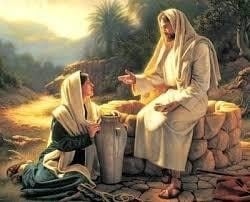 Worship and Witness - Two Sides of Discipleship
The Samaritan woman was seeking for the Messiah, and Jesus acknowledges her sincerity by commending her. "But the hour is coming, and now is, when the true worshipers will worship the Father in spirit and truth; for the Father is seeking such to worship Him. God is Spirit, and those who worship Him must worship in spirit and truth" John 4:23-24. Worship for the woman was initiated in her in a personal journey of discovery with Jesus at the well, but one that she became willing to share with her village people. While the discovery was made in a private encounter with Christ, for her this new experience belonged to the public domain of the village life thus she became committed to make it known to all who would listen to her. "Come, see a Man who told me all things that I ever did. Could this be Christ?" John 4:29. This excitement and joy in meeting the Messiah in person, and her personal testimony to the community were part and parcels of her new life as a disciple. More importantly for us, this story clearly demonstrates the personal impact of worship (being found in the presence of Jesus) in the life of a community. "And many of the Samaritans of that city believed in Him because of the word of the woman who testified, He told me all that I ever did. So, when the Samaritans had come to Him, they urged Him to stay with them; and He stayed there two days. And many more believed because of His own word" Jn 4:39-41. This account of worship, conversion, and personal witness suggests that as Christians, we could not experience the God of community personally without making positive ripples around us in the lives of people that we live with and meet daily. Thus, leading to stewardship with our time, our talents, and treasure.
-
-
-
 The Lenten season prepares us for the celebration of Easter. It is a time for Christians to embrace prayer, fasting, and almsgiving in a more concerted way. For some it is a time of healing, an opportunity to repair their spiritual brokenness. For others, it is simply a time to cultivate their spiritual lives in a more disciplined manner. The goal of Lenten practices: to prepare ourselves to enter into the paschal mystery of Holy Week with a more humble spirit and determination to follow Jesus Christ. This ancient triad of prayer, fasting, and almsgiving offers wonderful spiritual benefits.
-
Be a Good Steward of the Lenten SeasonBeing a good steward of these gifts by planning ahead and following through is essential to having a fruitful Lenten experience.
- Prayer: What greater gift could we give ourselves during Lent than the gift of prayer? The fruits of developing a disciplined time of prayer are bountiful. Make plans for a prayer time each day. Do not wait until you "find time" but make a time of prayer your priority. This will involve sacrifice on your part - perhaps giving up some television viewing time, using part of your lunch hour, or getting up in the morning earlier than usual. Along the way, spend some time in extra prayer with the community: a weekday Mass, Stations of the Cross. Whatever you decide, resolve to spend more time with the Lord.
- Fasting: Christian stewards understand that all they receive, including the bountiful food and drink that is often taken for granted, ultimately comes from the Lord. By denying ourselves food for a time, we are reminded in physical and emotional ways of the Lord's generosity. As we fast, thoughtlessness is replaced by gratitude and mindfulness of the needs of others. The ancient practice of fasting also conditions us for greater spiritual practices. Incorporate some aspect of fasting from food or drink into your Lenten practice, something in addition to the sacrifices we make on Ash Wednesday and the Fridays of Lent.
- Almsgiving: The spiritual discipline heightens our sense of generosity. Just as an increase in prayer and fasting leads us to be more grateful of the gifts we've received, and promotes a greater awareness of others, almsgiving helps us to reach out to others in gratitude. Just as we don't "squeeze in" time to pray during Lent, we also don't scrutinize our checkbook when being generous with others. Again, make a plan and let a meaningful sense of sacrifice be your guide.
-
-
-
Stewardship & the Ten CommandmentsStewardship and the Ten Commandments are deeply linked, as the commandments provide the ethical framework for managing God's creation and resources. They call for stewardship over time, talent, and treasure, highlighting that God owns all things, while humans are caretakers responsible for using them to glorify Him and serve others. Key connections between stewardship and the Ten Commandments include:
- Recognition of Ownership (First 4 Commandments): The first four commandments (e.g., no other gods, honoring the Sabbath) emphasize that God is the Creator and owner of all things, establishing the foundational principle of stewardship: that we are managers of His resources.
- Responsible Management (The 5th - 10th Commandments): The remaining commandments, particularly the Eighth ("You shall not steal"), are directly related to stewardship. They require respecting others' property, being honest with resources, and not misusing or wasting what God has entrusted to us.
- Stewardship as Obedience: Disobeying God's commands, such as coveting or stealing, is considered thievery of God's resources, whereas obedience is the practice of faithful stewardship.
- Do I live as if I own my possessions, or as a steward of God's property?
- How am I using my limited time to serve God and others?
- Am I using my unique skills to contribute the community?
- Am I generous with my finances, or am I hoarding?
- Do I treat my body and health as a gift from God?
-
-
-
"You are the salt of the earth... You are the light of the world."
- Matthew 5:13-14
In today's Gospel, Jesus uses two powerful images - salt and light - to describe our mission as disciples. Salt preserves, enhances, and purifies. Light reveals, guides, and brings comfort. Both are essential in the world, and both only fulfill their purpose when they are used, not hidden or forgotten. Jesus challenges us: don't lose your flavor. Don't hide your light. Instead, live your faith so boldly and authentically that others are drawn not to you, but to God through your good deeds.
What does this mean for us as stewards?
True stewardship is not just about offering our time, talent and treasure - it's about how we offer them: generously, joyfully, and with intention. It's recognizing that all we have is a gift from God, and then choosing to use those gifts to bless others. To be "salt of the earth" is to preserve goodness and bring out the best in our families, communities, and parishes. To be "light of the world" is to live in a way that reflects Christ's love - illuminating hope where there is darkness, and inviting others into God's presences through our service and example. May we be bold stewards - salty and shining - so that through our faithful witness others may glorify our Heavenly Father.
Reflection Questions:- Where am I being called to season the world with God's love?
- How can I let my light shine more intentionally in my family, parish, or workplace?
- Am I actively using my gifts to build up the Body of Christ?
-


